Sunday, 16 September 2012

Papal plots, a sexy priest, and Perugia!


I have published my novel.

The Virgin and the Griffin is now available on Amazon.com as an e-book for the low, low price of $3.99US, plus tax.

www.amazon.com
www.amazon.it
www.amazon.co.uk

It's a work of historical fiction set in the small Italian city of Perugia, and filled with intrigue, Papal plots, and a sexy priest.

I'm urging all my friends and blog readers to buy it - not only because they're friends and I would like their support. But also, because I think it's a good book.

So, bring it to book club! I'll be happy to answer questions; Skype with book clubs about it, if they would like.

And, I would greatly appreciate feedback and constructive criticism. Drop me a note!

This is my first novel, and it took 3 years to write and publish. Hopefully, my next novel, which I'm currently working on, won't take quite so long.

BTW, I should also mention this novel contains a sex scene with a priest - I hope that won't dissuade readers! Really; it's not at all gratuitous!

As I've mentioned before, the novel was in many ways, inspired by a gorgeous textile that I bought several years ago from Marta Cucchia, a very talented weaver in Perugia who is trying to keep the Umbrian weaving tradition alive at her family's Giuditta Brozzetti laboratorio.

The Virgin and the Griffin tells of a young woman's struggle to find a measure of joy and beauty in a violent, fear-filled society in a Renaissance Italian city fractured by politics and war, yet a place where great beauty and love are still possible.

In 1504 Perugia, an ancient city in central Italy, is a place of great art, great violence – and a great many secrets. Isabella Bevilacqua, a young weaver in her family's small workshop, understands this very well. Her dreams of creating a work of great beauty must, like her burgeoning relationship with the enigmatic Father Michele Gialletti, remain carefully hidden from her family and from Perugia's powerful weavers' guild.

Keeping secrets is essential to survival in this city, where wealthy and jealous noble families clash viciously on the streets, in the piazzas – even within the Cathedral of San Lorenzo....

Much of the background to my novel is based on facts: Pope Julius, known so well for commissioning Michelangelo to paint the Sistine ceiling, did in fact march an army on Perugia to control the warring families. Great painters discussed in the novel, such as Raphael, really did live and work in Perugia.

Sunday, 9 September 2012

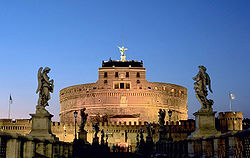
A Mausoleum by Moonlight


Imagine my surprise on discovering that the Castel  Sant'Angelo, originally built as a mausoleum for the great emperor Hadrian, hides some wonderful art within its fortress walls.

A moonlight visit to the mausoleum revealed that, as well as the famous passetto which connects the Vatican with the Castel so that popes under siege could flee to safety within the fortress.


During the summer, Castel Sant'Angelo offers late-night tours that open areas usually closed, such as the passetto, so I was able to pretend that I was Pope Clement VII  who, with 1,000 friends, fled along the elevated, fortified walkway to safety during the Sack of Rome in 1527.

(The passetto more recently gained infamy in the  Dan Brown novel and subsequent movie Angels and Demons, as the link between the Vatican and the assassin's lair.)


In truth, much of the great art secreted in the Castel is open to the public; I just hadn't realized that Clement VII's beautifully frescoed bathroom was there, or that Pope Paul III's bedroom and receiving chambers were so gorgeous.

Pope Paul III, born as Alessandro Farnese, was pope from 1534 to 1549 and created a set of beautiful apartments decorated by such names as Antonio da Sangallo the Elder, Pierin del Vaga, Marco da Siena, and Pellegrino Tibaldi.  I also found a Luca Signorelli there.

Most of this was explained to me by my Roman-born friend Laura, an art scholar who is polishing her English to become a specialized tour guide.


Built by emperor Hadrian on the right bank of the Tiber between 135 AD and 139 AD, the mausoleum contained urns with the ashes of Hadrian's family. However, the tomb (and many of its contents) were lost after it was converted into a  military fortress in 401 and when it was later built into Rome's Aurelian Walls by Flavius Augustus Honorius.


Beginning in the 1300s, a series of popes converted the structure into a castle. Pope Nicholas III connected the castle to the Vatican with the passetto, which proved very useful as the fortress was the refuge of Pope Clement VII from the siege of Charles V's Landsknechte during the Sack of Rome in 1527.


It's no longer possible to take photos inside the papal apartments, but these old shots show the chapel built by Leo X with a Madonna by Raffaello da Montelupo. Musical concerts are now held here.


Sunday, 2 September 2012

A discovery at Palazzo Altemps


One of the most beautiful aspects of Rome's Palazzo Altemps isn't the ancient statuary, or even the lovely courtyard with its mosaic fountain.

It's the church.

I was surprised to find a really lovely church - not just a home chapel, but a proper church - inside this 15th-century palazzo located just at the top of Piazza Navona.


After months of living in Rome, and much time spent here as a visitor, I hadn't before gotten around to visiting the Altemps, one of Rome's lesser-known museums.

Besides being so  very centrally located, it displays some of the very best of the important collection of classical sculpture amassed by the Museo Nazionale Romano (Rome's municipal system of museums.)


Many of the pieces come from the celebrated Ludovisi collection, put together by Cardinal Ludovico Ludovisi in the 17th century.


Yet it's overlooked by most visitors (me included, until very recently.) In fact, while I was there on Saturday, I saw only a few people rushing through the rooms of the palazzo, snapping a few photos, and rushing back out.

I liked the palazzo. I like the peace, the statues were interesting (although not really my thing.) I marvelled at the gorgeous, painted loggia on the first floor (or, what we'd call second floor in North America. One up from ground level.)


But what I really appreciated was the Church of Sant'Aniceto of Palazzo Altemps.


Beautifully decorated, I particularly loved the series of baby angels and cherubs frescoed across the high walls and ceiling. One little fellow seems to have fallen out and is shown climbing up over a railing to join his chums, his little bare bottom waving at the congregation.


(Apologies; I forgot my camera so these are wikipedia photos.)

Initially, this was simply a chapel as was the tradition for the great patrician families. Until this family somehow got hold of the remains of Sant'Aniceto, one of the first popes, managing the Catholic Church from 155 to 166 AD.

To honor these relics, the family chapel was transformed into a legitimate church, complete with dome and sacristy between 1603 and 1617.

The presbytery is decorated with a Marian cycle (including, of course, an Annunciation) and an enormous reliquary that presumably contains the remains of Sant'Aniceto and which serves as the high altar.

Thursday, 30 August 2012

Gragnano pasta


I'm not a food expert (although I love food) so I don't often write about Italian recipes, ingredients, or post restaurant reviews.

But I do find the story of the pasta produced in the area around the town of Gragnano near Italy's Amalfi Coast to be really interesting. So, here's an article I wrote for the Italian news agency about the community, one producer, and its pasta

There is passion in the pasta produced by the workers in La Fabbrica della pasta di Gragnano, owned by the Moccia family.

After all, it's in their blood and runs through the community of Gragnano, near Naples in southern Italy.

“Making pasta in Gragnano is an ancient form of art that involves history, culture, patience, secrets, and traditions,” said the Moccia siblings, who took over the business from their father, Mario Moccia.

“To be born and raised in Gragnano means to be surrounded by the exalting taste and scent of the durum wheat semolina and from the pasta that comes from it....and, like an enchantment, you just can’t live without (it).”


The family has had a few business ups and downs. In 1976, Mario Moccia operated a business producing cheese, yet was so fascinated by pasta making that he bought a troubled pasta factory.

Moccia focused on revamping the factory in Gragnano, a city that lies between the gulf of Amalfi and the gulf of Sorrento, and for 500 years has been a community devoted to the production of great pasta.


However, in another reversal of fortune, the Moccia family was forced to sell their factory in 1994.

Mario Moccia's children still did not give up, even after their father's death.

In 2006, “as tribute to our father, we decided to start this pasta factory,” they explained, and began producing for export markets as well as Italian consumers from La Fabbrica della pasta di Gragnano.

They've been working very hard to live up to the storied history of their city, which at one time boasted as many as 300 pasta factories spawned by the region's spring water, mountain air, and ample sunshine needed to produce great pasta.

Pasta makers in Gragnano once draped great strands of spaghetti from rods along the city's wide main street, so the pasta could slowly and naturally dry in the warm sun and mountain breezes.


In fact, the city and region are so important to the production of great pasta that in 2010, Gragnano pasta obtained the Protected Geographical Indication (PGI) mark, a European Community quality endorsement assigned in Italy.

The law is designed to ensure that only products genuinely originating in a specified region can be identified as such, to protect the reputation of the regional foods, promote rural and agricultural activity, help producers obtain a premium price for their authentic products, and eliminate inferior knock-offs.

That quality assurance is important to Gragnano where about a dozen pasta manufacturers remain.

The city of Gragnano boasts that its pasta has been renowned for its quality for centuries, mainly due to the ingredients and traditional processes used in production.

These include local, pure spring water, a particular kind of wheat, and traditional production methods including extrusion of the pasta dough through bronze dies to give it the desired length and shape, as well as a bit of roughness necessary to catch and hold pasta sauce after cooking.

Gragnano pasta is now exported across Europe, Russia, Brazil, Australia, Canada, Panama, Japan, India, and Singapore.

Thursday, 9 August 2012

And, as an added bonus......


To practise Italian, and meet people here in Rome, I've joined an online organization called Conversation Exchange, which matches people by language skills.

For the most part, it's worked out well. I've connected with several native Italians who want to speak better English while helping me with Italian.

An added bonus has come with my new friend Laura, a native Roman who wants to be an English-language tour guide to supplement her teaching income.

So, our weekly get-togethers generally involve a private tour for me, in English, of some fascinating site, followed by a long coffee in Italian.

Last week, we explored Rome's fascinating Santi Quattro Coronati, a basilica that dates from as early as the 4th century and is devoted to four martyrs who became saints.


Although the church is a stone's-throw from the Colosseum, I hadn't yet gotten around to visiting it.

It's really gorgeous - lovely cloister, beautiful frescoes (especially if you ring the bell to get inside the St. Sylvester chapel) and an interesting history.


The church was built like a fortress - which was one of its original jobs, to protect the pope of the day who was living nearby in the Lateran Palace.


One of the first churches of Rome, construction was completed the end of the 6th century, then expanded under Pope Leo IV (847-855) in Carolingian style.

However, in the Norman Sack of Rome in 1084, a sizable chunk of the basilica was destroyed and a subsequent pope rebuilt only what was left. (Laura, an excellent tour guide, pointed out bits of evidence of this. For example, there are now two courtyards - the original plus the “new” courtyard established after the sack, over what had been a long stretch of the nave of the church. So now, the church looks strangely square.)


Anyway, in 1247, the chapel of St Sylvester, on the ground floor of the fortress, was consecrated; and decorated with frescoes telling the false tale of how Constantine gave the Catholic church sovereignty over the Roman Empire.

Inside the basilica are frescoes explaining the story of the four martyrs to whom the church was dedicated, and whose remains supposedly rest here.

The Four Crowned Martyrs - Santi Quattro Coronati - were reportedly four soldiers who became Christians at the time of Emperor Diocletian (284-305). The emperor ordered their execution when they refused to worship a god he chose.

By the way, a nun we met in the cloister said that later this year, the church is going to open the doors on a Gothic hall that is apparently filled with frescoes that are only now being made public.

The 13th century frescoes had been so well hidden that it actually served to preserve them in apparently fantastic condition.

Can't wait to see that!

Thursday, 26 July 2012

Life in Italy: my 8-month update


As I hunt for a new apartment here in Rome, I've been reflecting on how my first 8 months here have been. In sum: wonderful, but far more challenging than I had expected.


But first, to the apartment hunt.

I love the place I'm in now: Monti is a wonderful neighbourhood, my street is very quiet (for Rome); I can see the Colosseum from the end of my street, it's that historic.

But, it is also very expensive as I struggle to live on an Italian salary. I've discovered there is a serious mis-match between the cost of living in Rome, and the average salary. Just one of the country's many economic problems.


So, it's time to begin looking for a my third apartment in just 8 months in Rome.


Actually, I wasn't very confident when I arrived here last December that I would be able to financially last this long, so 8 months is something of a milestone for me.

I had no doubt when I left Canada that I could make it here in every other aspect. I knew I would be lonely, but that's something I've made peace with long ago.

I knew I would feel out of place and struggle with the language, but I also knew I could cope.

The one area where I knew I would struggle would be earning enough euros to survive in Italy.

Now that I have more and more work coming from the Italian news agency ANSA, I'm feeling a bit more secure. Not secure enough to ship all of my furniture from Canada and sell my beloved car - not yet, anyway. But secure enough to think I can make it until at least the one-year anniversary of my arrival here.


There are so many things I do not understand about the beautiful, and very complicated country.

But I feel I'm making progress!

I found a doctor, who is working out very well. And I've found a great hairdresser.

After more hassle than I expected, I obtained my codice fiscale, which is similar to a social security number. (You can get unofficial codice fiscale on line, but they're of no use for official purposes like opening a bank account, applying for work, and paying taxes.)

After much less hassle than I expected, I obtained my health card, the tessera sanitaria.

After little hassle but an enormous amount of paperwork, I opened a bank account with a tiny one-euro monthly service fee. I still haven't worked out how to really use this account, since it's mostly empty. But still.

I've been practising my Italian and even made some new Italian friends in Rome through Conversation Exchange, an online program that matches people by language skills. I have the English skills my new friends want; they help me with Italian.

Most importantly, I've obtained my official card to work as a journalist here, and with a lot of help I've found more and more contract work with the news agency. There's absolutely no job security, but it's a good start.

Daily life in Rome is more work than I realized. I'm constantly running errands, since there is no one-stop shop for everything, similar to the giant supermarkets in Canada. I can only find contact lens solution at the opticians. Vitamins from a drug store. Cleaning products from an alimentari.

The nearest grocery store doesn't have very good fruit and vegetables, so I go to the fruit and vegetable lady on Via Serpenti.

And since I carry my groceries home, I don't buy too much a time (and you can't anyway, since many items, including milk, don't contain many preservatives so they don't last long.)

I don't mean to complain; I'm just remarking on how different this life is.


But I think the biggest surprise for me is learning how much I can actually live without.

I don't miss my furniture and clothes and books and all the things now packed in storage. Of course, it has only been 8 months, so it's probably a bit early to say.

Still, I was always so certain that I needed my things around me; that they were essential. Maybe they're not.

I thought I couldn't live without screens on the windows. I hate bugs and it bothered me if there was even a hole in the screen back in my old apartment in Canada. Here, screens are rare and I've survived leaving the windows wide open.

I was certain I couldn't live without air-conditioning running all night. Turns out, I'm fine without it. It would be nice, but apparently, it's not essential.

I deeply miss my friends in Canada; they're certainly something that I cannot do without. But thanks to email and Skype, I can talk with them and stay in touch. Knowing that I have so much love and support behind me has been invaluable in this.

Allora. I'm off to look at a new apartment this afternoon with a friend of a friend who seems to be some kind of real estate broker. Gemma doesn't speak any English, so I'm not completely confident that I know where we're going, how many apartments she can show me in my price range. I'm not even entirely sure when we're meeting, or where.

This is my new normal -- and at least I know that it's bound to be interesting.
Sunday, 15 July 2012

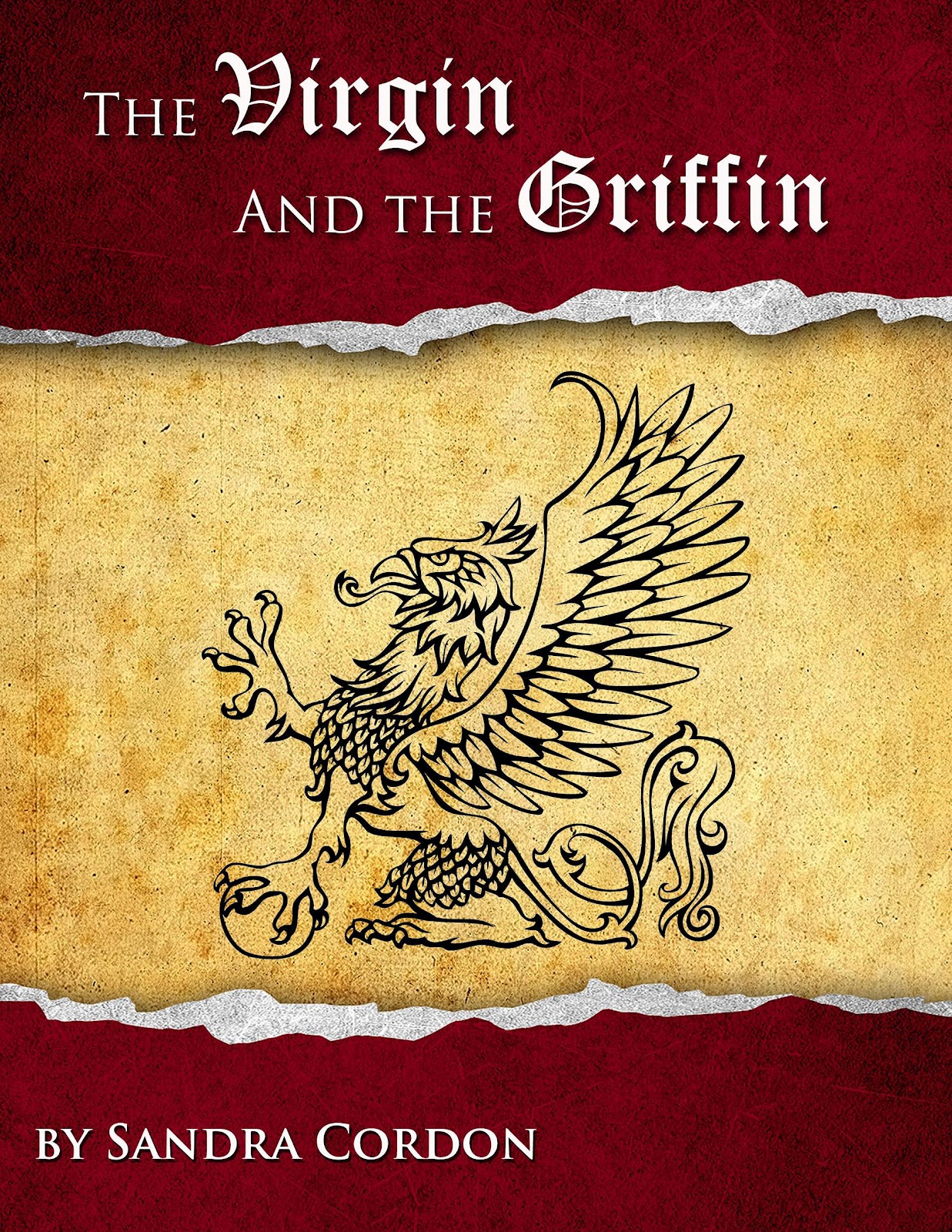
The Virgin and the Griffin


That's the title of my novel, which I am close to publishing as an e-book. The manuscript is now being formatted, the cover is ready, so once all the technical details are wrapped up, I'll be publishing.


My novel, which I began work on three years ago, is a piece of historical fiction, set in Perugia at the beginning of the 16th century. In many ways, it was inspired by a gorgeous textile that I bought several years ago from Marta Cucchia, a very talented weaver in Perugia who is trying to keep the Umbrian weaving tradition alive at her family's Giuditta Brozzetti laboratorio.


This is my first novel, so I suspect there will be mistakes and criticisms but I hope these will help me to improve my  writing in my next novel, now in the works.

But, I'm getting ahead of myself!

The Virgin and the Griffin tells of a young woman's struggle to find a measure of joy and beauty in a violent, fear-filled society in a Renaissance Italian city fractured by politics and war, yet a place where great beauty and love are still possible.

In 1504 Perugia, an ancient city in central Italy, is a place of great art, great violence – and a great many secrets. Isabella Bevilacqua, a young weaver in her family's small workshop, understands this very well. Her dreams of creating a work of great beauty must, like her burgeoning relationship with the enigmatic Father Michele Gialletti, remain carefully hidden from her family and from Perugia's powerful weavers' guild.

Keeping secrets is essential to survival in this city, where wealthy and jealous noble families clash viciously on the streets, in the piazzas – even within the Cathedral of San Lorenzo....

Much of the background to my novel is based on facts: Pope Julius, known so well for commissioning Michelangelo to paint the Sistine ceiling, did in fact march an army on Perugia to control the warring families. Great painters discussed in the novel, such as Raphael, really did live and work in Perugia.

And Perugia is, of course, a beautiful, mysterious, sometimes marble-hard city that fascinates.


I can't wait to publish my novel and bring my characters to life!